Mix value vs normal note counter: which one does your shop need?
- A normal note counter tells you how many notes; a mix value counter tells you the total rupee amount.
- Semi value counters show value for one denomination at a time.
- Buy mix value only if you regularly take mixed cash; otherwise a loose note counter does the job for less.
All three types count notes and check for fakes. The difference is what they tell you at the end.
Side by side
| Normal (loose note) | Semi value | Mix value | |
|---|---|---|---|
| Shows | Number of notes | Count and value, one denomination at a time | Total value of mixed notes and count per denomination |
| Pre-sorting needed | Yes, to know value | Yes | No |
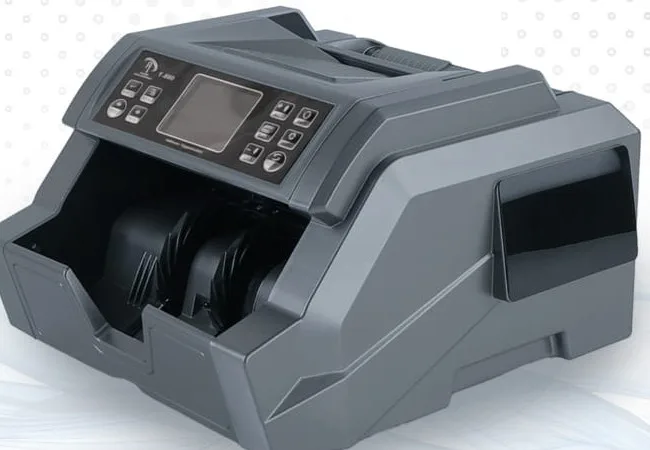
| Our model | Kores EasyCount 442 | T-100 | T-800 |
| Speed | 900 notes/min | 1,200 notes/min | 1,200 notes/min |
| Detection | UV, MG, IR | UV, MG, IR, MT | UV, MG, IR, MT |
| MRP | ₹13,750 | ₹13,990 | ₹24,990 |
Choose a normal counter if
Your cash arrives sorted, or you mainly need a quick count and fake check before a bank deposit.
Choose a mix value counter if
Customers pay in mixed notes all day, as at jewellery shops, wholesale counters and supermarkets. Skipping manual sorting saves several minutes on every large payment and removes the most common counting error.
Not sure? Call 88260 35757, 88260 35858 or 88260 35959 with your daily cash volume and we will suggest the right machine.
FAQ
What is a mix value counting machine?
A machine that recognises each note's denomination while counting and shows the total rupee value of a mixed stack, plus the count of each denomination.
What is the price difference?
On our range, a loose note counter starts at ₹13,750 (Kores EasyCount 442), a semi value counter is ₹13,990 (T-100) and a mix value counter is ₹24,990 (T-800), MRP.